The short answer: For a meaningful luxury renovation in Paradise Valley, a realistic planning conversation often begins around $500,000. A broad whole-home transformation can move into the $750,000 to $1.5 million range, while major structural reconfiguration, additions, new systems, extensive glazing, custom millwork, and resort-style exterior work can push the investment beyond $1.5 million to $2 million or more. The home’s value is not the formula; the scope is.
When someone asks what it costs to renovate a $2 million home in Paradise Valley, the home’s price is useful context – but it is not the number that determines the renovation budget. A $2 million house may need little more than a carefully planned interior update, or it may need to be reworked almost from the structure outward. Two homes with the same market value can require completely different investments to become the home their owners want.
That is why the better starting question is not, “What percentage of the home’s value should I spend?” It is, “How much of the home needs to change?” In a luxury renovation, cost follows scope: how many walls move, how much of the mechanical and electrical infrastructure changes, whether square footage is added, how much custom work is involved, and how thoroughly the interior and exterior are being tied into one new vision.
At Bella Legacy, we think the most useful early conversation is about the finished experience first. What should feel different when the renovation is complete? Once that is clear, the budget can be organized around the changes that actually create that result.
What Is a Realistic Renovation Budget for a $2 Million Paradise Valley Home?
For planning purposes, significant luxury renovations in Paradise Valley often fall into three broad levels. These are not bids and they are not rules; they are a way to understand how quickly scope changes the investment.
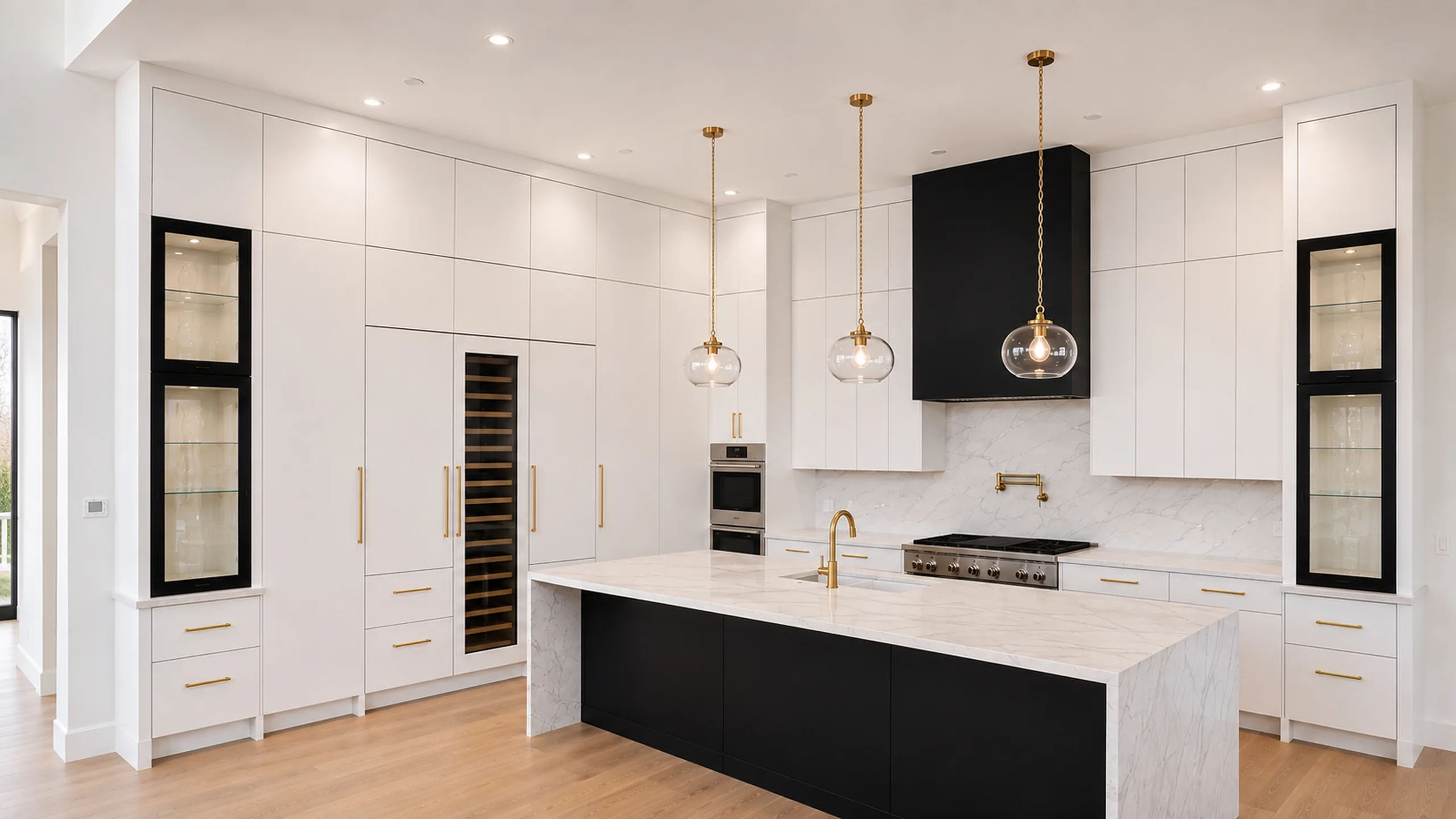
- Focused luxury transformation: roughly $500,000 to $750,000. This might include a major kitchen and great-room reconfiguration, a primary suite, upgraded finishes, selective windows or doors, and related mechanical or electrical work without fundamentally rebuilding the entire home.
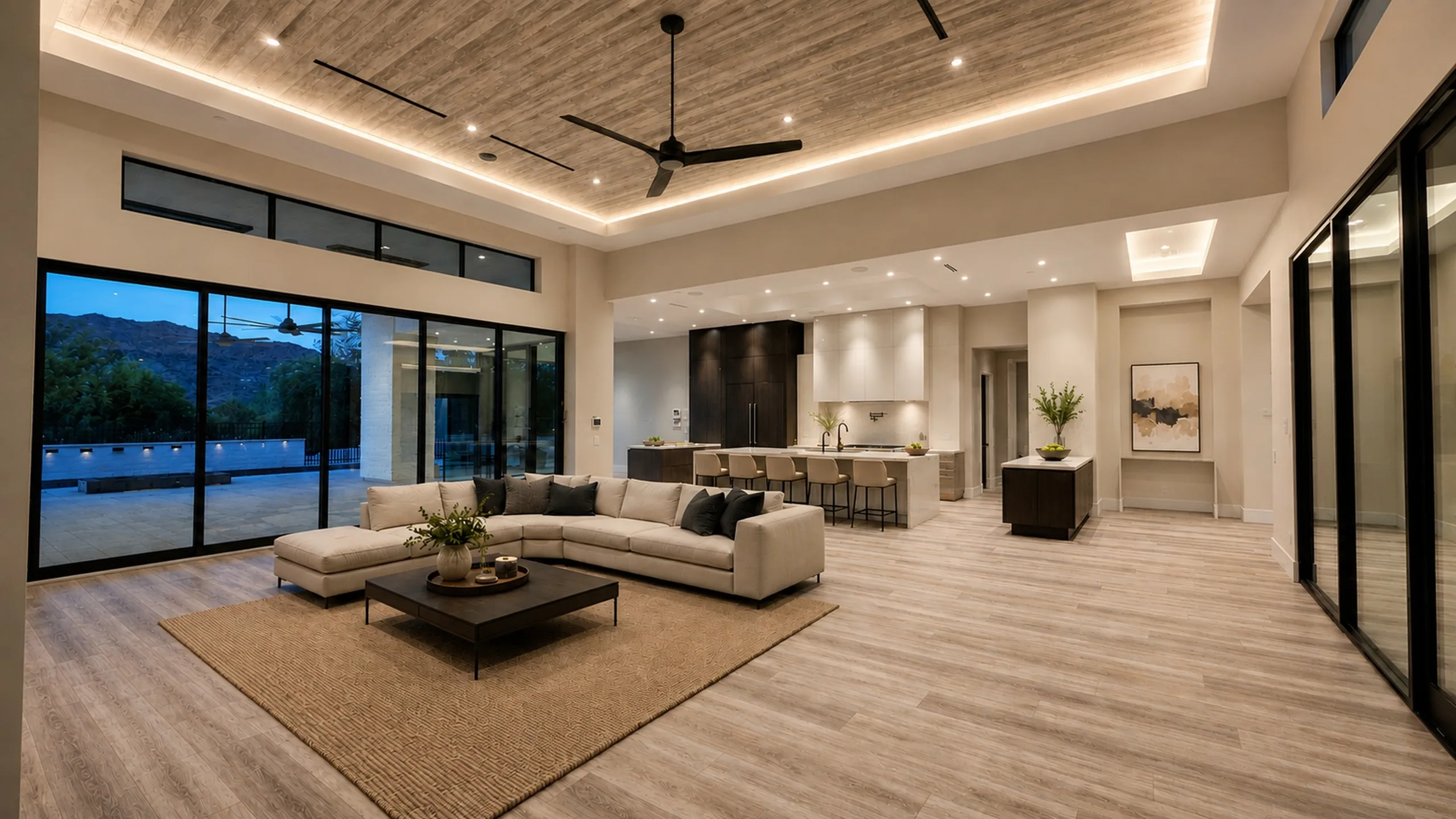
- Substantial whole-home renovation: roughly $750,000 to $1.5 million. At this level, the work may touch most major rooms, replace large portions of the finishes and systems, open or reorganize the floor plan, add significant custom cabinetry, and improve the home’s relationship to the backyard.
- Major architectural transformation or addition: $1.5 million to $2 million and beyond. Large additions, major structural work, extensive new glazing, roofline changes, whole-home systems, pool and landscape reconstruction, custom millwork, and premium material packages can move a renovation into this range quickly.
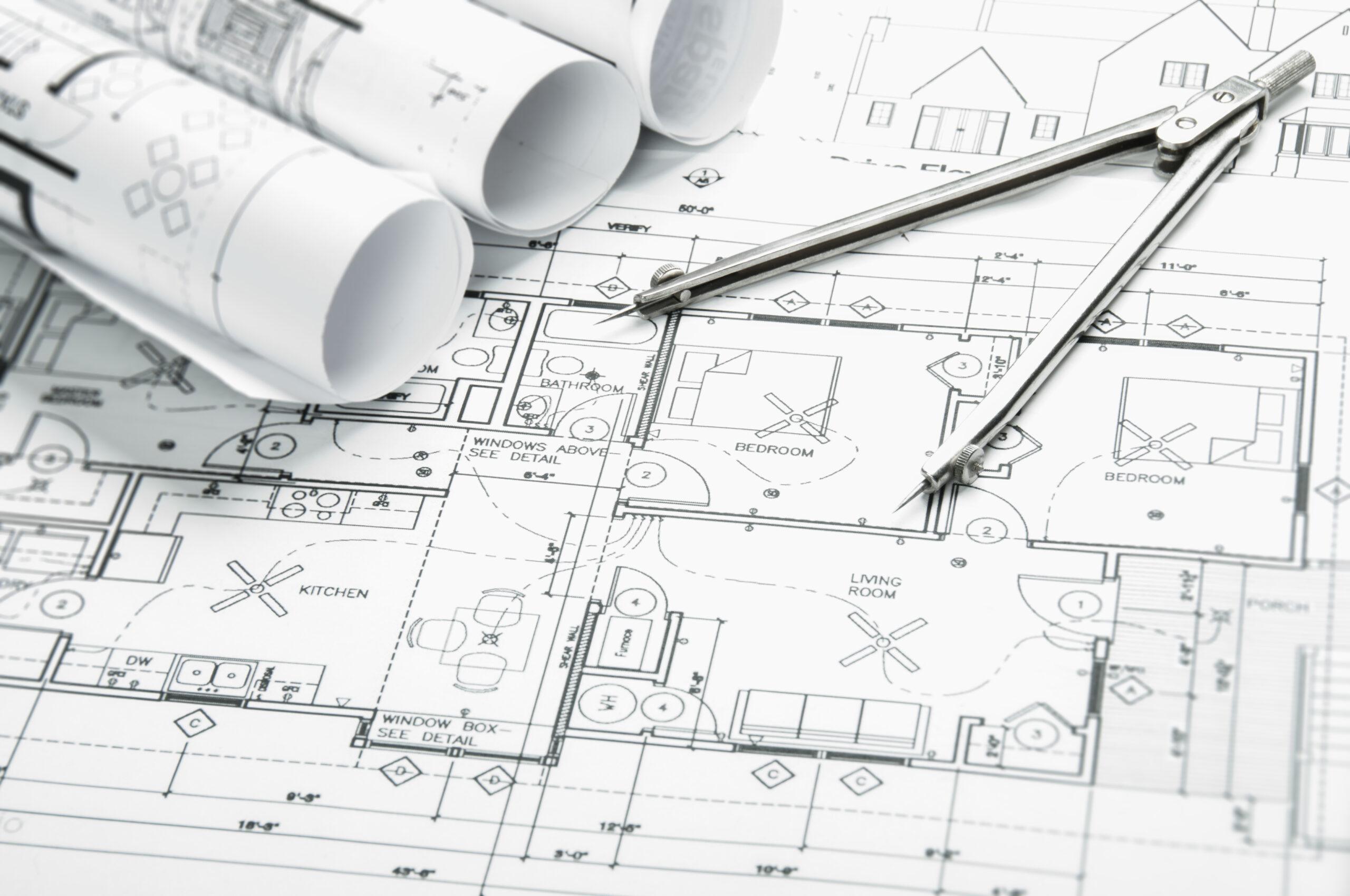
The important word is “planning.” A detailed estimate requires drawings, existing-condition information, finish assumptions, and a clear definition of what is and is not included. Renovations are especially sensitive to hidden conditions because some of the most important information is not visible until demolition begins.
Why the Value of the Home Is a Poor Renovation Formula
A common rule of thumb is to base a renovation on a percentage of the home’s value. That can be useful as a quick gut check, but it is a poor way to price the work. Construction does not become less expensive because the existing house happens to be worth less, and a high-value home does not automatically require a larger scope.
In Paradise Valley, location can represent a large portion of the value. A home may sit on an exceptional lot with Camelback Mountain views, mature landscaping, privacy, or a location that would be difficult to replace. In that situation, investing heavily in the house can make sense because the owner is preserving something that is already difficult to duplicate: the land.
Where Does the Money Usually Go?
On a serious luxury renovation, the cost is rarely concentrated in one dramatic feature. It is distributed across the structure, the systems, the visible finishes, and the work required to make new and existing construction feel like one home.
- Structural changes: removing walls, adding steel, changing roof geometry, creating larger openings, or rebuilding portions of the floor plan.
- Kitchen and cabinetry: custom cabinetry, appliance packages, stone, prep kitchens, pantries, lighting, and the construction required to change the layout.
- Windows and doors: larger openings, multi-slide systems, higher-performance glazing, and the structural work needed to support them.
- Mechanical, electrical, plumbing, and low voltage: systems that may need to be expanded, relocated, or replaced when the floor plan changes.
- Primary suite and baths: plumbing relocation, waterproofing, custom stone and tile, cabinetry, lighting, and higher-end fixtures.
- Interior architecture: ceilings, fireplaces, millwork, doors, trim, wall treatments, flooring transitions, and integrated lighting.
- Exterior and outdoor living: patios, shade, pool changes, hardscape, landscaping, exterior kitchens, lighting, and the transition between the interior and yard.
The Existing House Can Either Help the Budget – or Fight It
The best renovation candidates usually have something worth preserving: a good orientation, a useful structural shell, strong views, reasonable ceiling heights, a workable relationship to the site, or a footprint that can be improved without forcing every room to move.
The difficult projects are the ones where every desired improvement exposes another limitation. If the kitchen needs to move, the roof has to change. If the great room opens up, major structural steel is required. If the primary suite expands, the pool or setbacks become an issue. If the ceilings need to be raised, the roof structure has to be rebuilt. None of those things automatically makes renovation a bad choice, but they change the math.
A $500,000 Renovation and a $1.5 Million Renovation Can Look Similar in Photos
Finished photography can be misleading because two projects may both show a beautiful kitchen, new flooring, and large glass doors. The difference is often in what happened behind the finished surfaces.
One project may have kept the existing room locations, plumbing, roof structure, and mechanical systems. Another may have removed major structural walls, replaced the HVAC system, moved plumbing across the slab, rebuilt the fireplace, changed the ceiling architecture, enlarged window openings, reworked the pool deck, and replaced nearly every interior finish. The photographs may look equally polished, but the construction effort is not remotely the same.
When Does Renovating Stop Making Sense?
There is no single dollar amount where renovation becomes the wrong answer. The decision usually changes when the existing home forces too many compromises into the finished design.
- The existing footprint prevents the layout you really want.
- Ceiling heights and roof structure would require extensive reconstruction throughout the home.
- The home is poorly oriented to the best views, privacy, or outdoor living areas.
- Most major systems need replacement anyway.
- The desired addition creates awkward circulation or an exterior that feels pieced together.
- The cost of preserving the existing structure is approaching the cost of replacing it while still leaving compromises behind.
That is the point where it is worth comparing a renovation plan to a new-home plan on the same property. The answer is not always to tear down. Sometimes the existing house contains exactly the bones worth saving. The goal is to make that decision before design work goes too far in either direction.
How to Build the Renovation Budget Before Falling in Love With the Design
The safest sequence is to evaluate the home, establish a realistic scope, create an early construction range, and then allow the design to become more detailed. Waiting until the drawings are finished to discuss cost often creates a painful choice between increasing the budget and redesigning a home everyone has already become attached to.
- Document existing conditions and identify obvious structural, mechanical, drainage, and site constraints.
- Define the rooms and relationships that truly need to change, not just the finishes that need updating.
- Separate “must solve” items from “would be nice” items.
- Create an early budget range with allowances that actually match the level of finish being discussed.
- Keep a meaningful contingency for renovation unknowns until demolition confirms what is behind the walls.
This is one of the reasons Bella Legacy prefers to look at renovation, design, and construction as one connected problem. A beautiful concept is only useful if it can be executed in a way that still makes sense for the property and the owner.
Frequently Asked Questions
Should I spend 20% or 30% of my home’s value on a renovation?
A percentage can be a quick reasonableness check, but it should not set the budget. The scope, structure, site, systems, and finish level determine the actual construction cost. In Paradise Valley, the lot itself may represent so much value that a large renovation can still be rational even when it is a substantial percentage of the existing home’s purchase price.
Is $500,000 enough for a luxury renovation in Paradise Valley?
It can be enough for a focused and meaningful transformation if the scope is disciplined. It is unlikely to fund a complete architectural reinvention of a large home with major structural changes, extensive custom millwork, new systems, and major exterior work.
Is it cheaper to renovate than build new?
Sometimes. If the existing structure, orientation, and footprint are useful, renovation can preserve a great deal of value. If nearly every structural element and system needs to change, the cost advantage can shrink quickly. The only reliable answer is to compare the two paths for the specific property.
How much contingency should I carry for a major renovation?
Major renovations should include a meaningful contingency because some conditions cannot be confirmed until demolition. The appropriate amount depends on the age of the home, the quality of available drawings, the extent of demolition, and how much of the existing structure and systems are being retained.
The Better Question Is What the Home Can Become
A $2 million Paradise Valley home may be a perfect renovation candidate. It may also be sitting on a property where starting fresh creates a better long-term result. The smartest decision comes from understanding the home before committing to either answer.
If the location, views, and setting are already right, the opportunity may be to transform the house around them. The best renovations preserve what is irreplaceable, change what no longer works, and leave the finished home feeling as though it was always meant to be that way.
Considering a significant renovation in Paradise Valley? Bella Legacy can help evaluate the existing home, the property, and the scope before you decide how far the transformation should go.