The short answer: for a luxury custom home in Scottsdale, site work can range from a relatively manageable six-figure scope on a straightforward, utility-ready lot to several hundred thousand dollars – or substantially more – on a difficult hillside property. As a 2026 planning framework, a comparatively simple custom homesite might carry roughly $75,000 to $200,000 in site-related work before the house is fully underway, while lots with meaningful slope, retaining, rock excavation, drainage, long utility runs, difficult access, or extensive desert-preservation requirements can move into the $200,000 to $500,000-plus range. Exceptional hillside sites can go considerably higher.
Those figures are planning ranges, not bids. The point is that site work is property-specific. Two Scottsdale lots with the same acreage and asking price can produce dramatically different construction budgets once the team understands what it takes to create a buildable, drainable, accessible, utility-served site.
This is why Bella Legacy prefers to evaluate the homesite before treating a per-square-foot house number as the project budget. The land can move the cost before the first finished material is selected.
What Counts as Site Work on a Scottsdale Custom Home?
“Site work” is not one line item. It is a collection of work required to turn a specific parcel into a place where the home can be built safely and legally.
- Surveying and site verification
- Geotechnical investigation and soils work
- Civil engineering
- Native-plant inventory, salvage, and revegetation where required
- Clearing and controlled site disturbance
- Grading, excavation, and engineered fill
- Rock and boulder excavation
- Retaining walls and slope stabilization
- Drainage improvements and stormwater management
- Temporary construction access and staging
- Driveways and access grades
- Water, sewer or septic, electrical, gas, and communications
- Temporary power and water
- Site walls, erosion control, and certain off-site improvements
Some budgets put these items inside the construction contract. Others separate portions of them. That is one reason we recommend comparing the complete project scope rather than only the builder’s headline number.
Why Scottsdale Lots Vary So Much
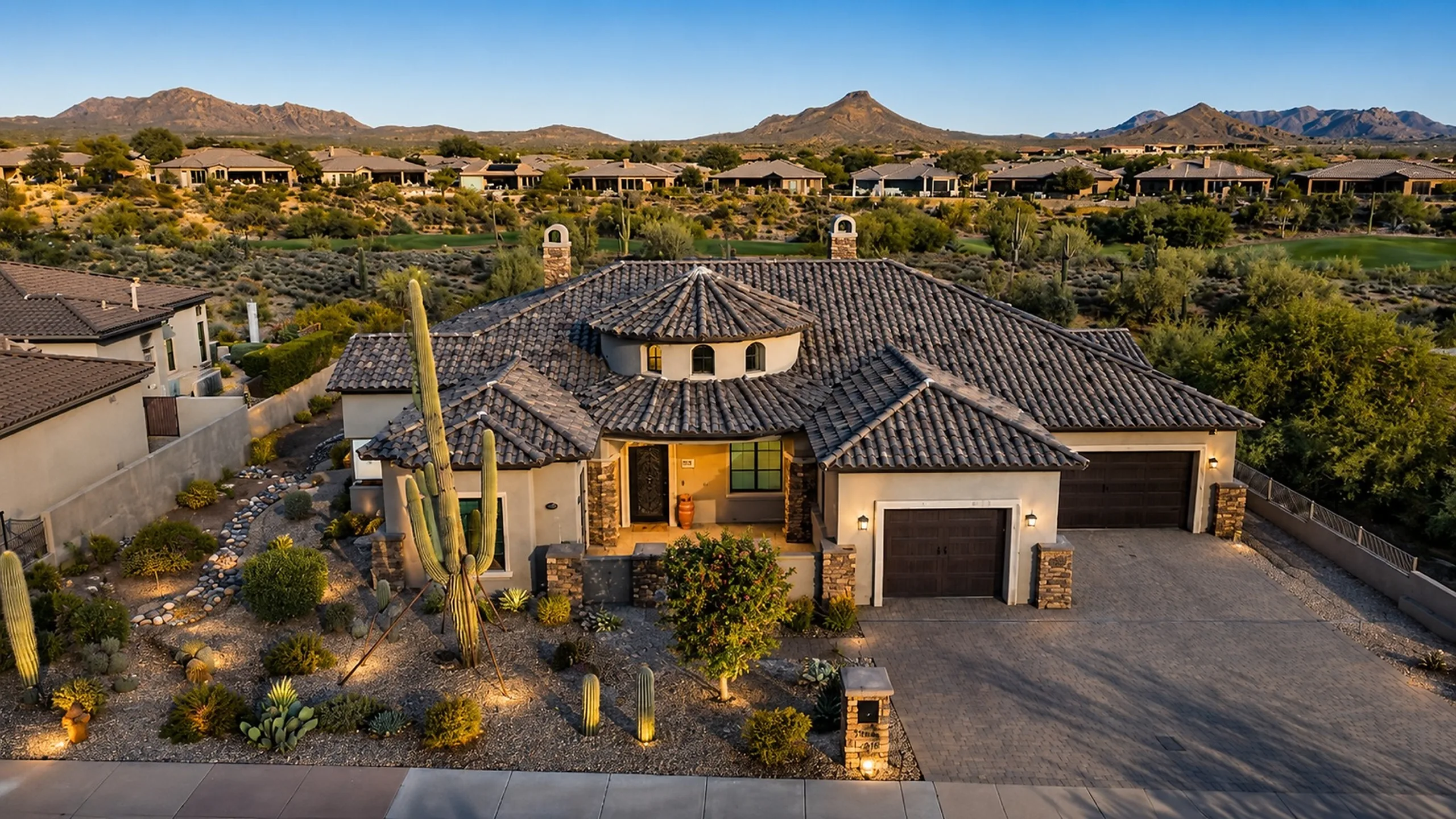
Scottsdale is not one uniform building environment. A relatively flat infill lot with utilities at the property line behaves very differently from a boulder-strewn site in the foothills.
The City of Scottsdale’s single-family custom-home submittal process can require civil site plans, grading and drainage plans, soils information, structural calculations, native-plant plans, and other property-specific material. On environmentally sensitive land, Natural Area Open Space, slope, washes, vegetation, boulders, and drainage can materially influence the usable development area. The City’s Environmentally Sensitive Lands Overlay information explains that NAOS requirements are tied to landform and slope and are intended to preserve significant portions of the native desert.
That means a visually spectacular site can also be a technically demanding one. The premium is not because the home is “luxury.” It is because construction has to solve the land.
A Practical 2026 Site-Work Planning Framework
Before detailed civil and structural work is complete, we think about site costs in broad levels rather than pretend an early number is precise.
Relatively straightforward lot: roughly $75,000 to $200,000
This may describe a flatter homesite with reasonable access, utilities nearby, limited retaining, conventional drainage solutions, and no unusual rock or hillside work. Even here, survey, soils, grading, trenching, temporary utilities, driveway work, and site preparation add up quickly.
Moderately complex desert lot: roughly $150,000 to $350,000+
This range can become relevant when the property has more grading, longer utility runs, meaningful drainage work, native-plant constraints, larger driveway improvements, difficult staging, or some retaining and rock excavation.
Hillside or highly constrained site: $250,000 to $500,000+ – and sometimes much more
Steep grades, extensive retaining, major excavation, difficult access, stepped foundations, long private drives, rock, boulders, complex drainage, and long utility extensions can create a very different budget. On exceptional sites, site and foundation-related work can move well beyond half a million dollars before the owner sees the finishes that typically get the attention.
These are not price guarantees. They are a reason to investigate the site before committing to a house size and finish package.
Grading and Excavation Are About More Than Creating a Flat Pad
Good grading establishes the relationship between the home, natural terrain, driveways, walls, landscape, outdoor living, and drainage. On a luxury site, the goal is not simply to flatten land. It is to create the minimum intervention necessary for the architecture to work while respecting the property.
That becomes especially important in the Environmentally Sensitive Lands areas of North Scottsdale, where preserved desert and disturbance limits may be part of the development framework.
Retaining Walls Can Become a Major Construction System
Retaining walls are easy to underestimate because they may appear as a few lines on an early site plan. In reality, significant retaining can involve excavation, engineered footings, reinforcing steel, drainage behind the wall, waterproofing, structural engineering, finish material, and careful sequencing with the house.
On a hillside project, retaining may also be what makes the driveway, garage elevation, pool terrace, and outdoor spaces possible. One wall is rarely isolated from the rest of the site plan.
Rock and Boulder Conditions Are Difficult to Price From a Listing
A desert lot can look buildable from the street while containing subsurface rock, caliche, or boulder conditions that materially change excavation. A geotechnical report helps the team understand soil and foundation conditions, but even good preconstruction work cannot expose every cubic yard of the site before excavation begins.
Scottsdale’s custom-home submittal guidance calls for a soils report or owner-signed soils waiver and detailed foundation information. We generally prefer as much site information as practical on a significant custom-home project because the cost of learning something early is usually far lower than learning it after excavation starts.
Utilities Can Turn a “Ready” Lot Into an Expensive Lot
Do not stop at “utilities are available.” Ask where they are, who provides them, what capacity is available, what must be extended, and what the finished home will require.
- How far is the electrical service from the planned home?
- Will a transformer or service upgrade be required?
- Is public sewer available, or will the property use septic?
- Where is the water meter and what size service is available?
- Will gas be used, and is it available at the parcel?
- How will low-voltage and communications reach the home?
- Will trenches cross preserved desert, driveways, retaining, or other improvements?
Long utility runs on a large or hillside parcel can create costs that do not exist on an infill site with services immediately adjacent to the building pad.
Drainage Is Not Optional in the Desert
Arizona’s dry climate can create a false sense that drainage is a secondary issue. It is not. Intense storm events can move large volumes of water quickly, and the home must be designed around existing drainage patterns, washes, neighboring properties, finished-floor elevations, retaining systems, patios, pools, and driveways.
Scottsdale requires grading and drainage information as part of custom-home review, and a pre-site inspection is required before construction on projects that affect grading, drainage, native plants, NAOS, or certain development-review conditions. The City’s site-inspection guidance makes that sequencing explicit.
Construction Access Can Affect the Budget Before the House Starts
A concrete truck, crane, steel delivery, excavation equipment, dumpster, framing package, and dozens of trade vehicles all need a practical way to reach the work. A beautiful narrow hillside drive may function perfectly for the finished residence and poorly for construction.
Staging can require temporary roads, protection of preserved areas, smaller equipment, additional material handling, or sequencing work in a way that adds labor. On constrained properties, access deserves its own preconstruction plan.
The Cheapest Lot Is Not Necessarily the Cheapest Property
A less expensive parcel that requires $400,000 of unusual site work can be financially less attractive than a more expensive lot that is easier to build. The reverse can also be true: an exceptional view may justify the premium because the finished property could never be replicated on a flat lot.
The useful comparison is not lot price to lot price. It is lot + site work + house + finished-property potential.
What We Want to Know Before You Buy the Lot
- Survey and recorded easements
- Zoning and setbacks
- Building envelope and any NAOS requirement
- Slope and hillside conditions
- Drainage and wash conditions
- Utility locations and capacities
- Sewer versus septic
- Geotechnical conditions
- Driveway and construction access
- Retaining-wall implications
- Native plants and boulder conditions
- HOA or community design review
- Pool and outdoor-living placement
- View orientation and privacy
- Likely site-work budget relative to the entire project
The City’s single-family plan submittal requirements are a useful reminder of how many site disciplines ultimately have to come together.
Frequently Asked Questions
Is site work included in the cost per square foot?
Sometimes, but not consistently. A cost-per-square-foot number is only useful if you know whether grading, retaining, utilities, driveway, drainage, landscape, pool, and other site improvements are included. Ask for the scope behind the number.
How much more does a hillside lot cost to build on?
There is no fixed percentage. A modest slope may add relatively little, while a steep boulder lot can require extensive excavation, retaining, structural work, access planning, and utility extensions. The premium should be estimated from the specific civil, geotechnical, and architectural concept.
Should I hire a builder before buying a Scottsdale lot?
You do not necessarily need a construction contract before buying land, but early builder input can be extremely valuable. A pre-purchase site review can identify visible cost and constructability issues before the lot drives the architecture.
Can the site-work budget be finalized before design?
Not completely. The house placement, floor elevations, driveway, pool, retaining, and utility plan all affect the site scope. The goal before design is to identify the major risks and establish a realistic range, then refine it as civil and architectural work develops.
Budget the Land Before You Budget the Finishes
A Scottsdale homesite can be the reason a custom home becomes extraordinary. It can also be the reason a project costs far more than the owner expected.
The answer is not to avoid challenging land. It is to understand it early. When the team knows what the site requires, the owner can make an informed decision about house size, architecture, exterior improvements, and the total investment instead of discovering the site premium after the design is already complete.
Considering a homesite in Scottsdale? Bella Legacy can review the property with you before the design is overcommitted and help identify which site questions should be answered next.