There is no universal percentage where a renovation automatically becomes a rebuild. The tipping point arrives when the project is preserving so little of the original home—or forcing so many compromises—that the cost, schedule and complexity of working around the existing structure no longer justify it.
The decision is a comparison, not a rule of thumb.
Count what is truly being preserved
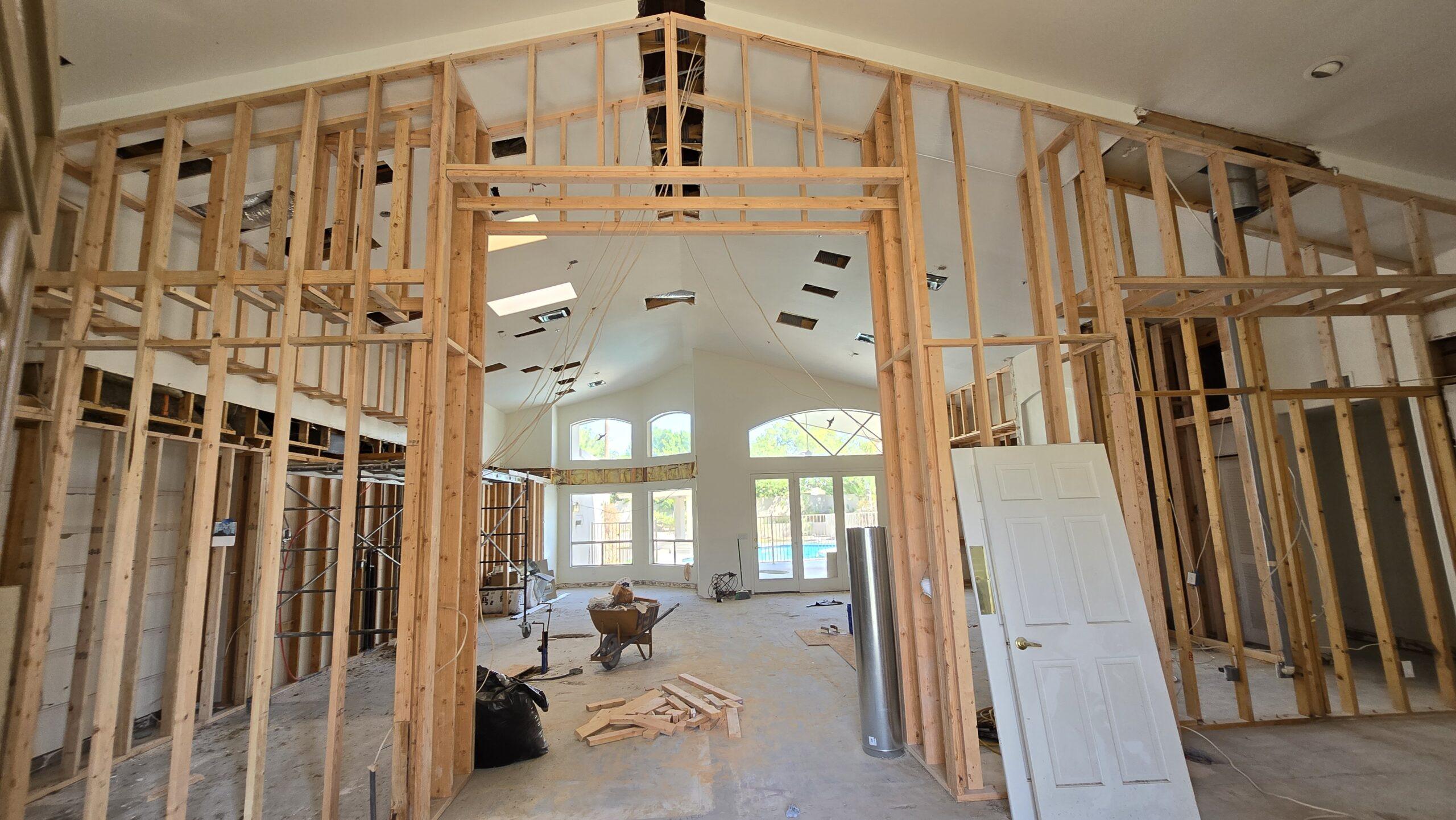
A renovation may sound like “keeping the house,” but ask what actually remains:
- foundation
- exterior walls
- interior bearing walls
- roof
- floor structure
- plumbing locations
- electrical
- HVAC
- windows and doors
- exterior finishes
- pool/site work
If nearly every system and surface is being replaced, the remaining structure may be providing less economic value than expected.
Structural changes can shift the economics quickly
Projects become increasingly complex when owners want:
- major wall removals
- higher ceilings
- large glass openings
- expanded footprint
- second story
- major roofline changes
- deeper garage
- indoor-outdoor structural openings
Each one may be feasible, but they compound.
The more the project restructures the house, the more important it is to compare a clean-sheet design.
Hidden conditions create renovation uncertainty
Existing homes contain unknowns behind walls and below finishes.
Demolition can reveal:
- prior unpermitted work
- framing inconsistencies
- water damage
- undersized systems
- outdated wiring
- plumbing issues
- foundation conditions
- concealed structural changes
A contingency belongs in any major renovation budget.
Rebuild does not automatically mean easier
A rebuild brings its own cost and time:
- demolition
- complete new design
- full site and permit path
- new foundations
- complete new systems
- possible new grading/site work
- longer period before occupancy
That is why the answer should be based on the specific property and desired result.
Compare quality of outcome, not only cost
A renovation may be less expensive but leave compromises in ceiling height, room proportions, structural grid, garage position or outdoor relationships.
A rebuild may cost more but produce the exact program.
The owner has to decide whether the remaining compromise is worth the savings.
The right time to compare rebuild is not after you have completed months of renovation design.
When the scope becomes structurally heavy, we prefer to price both paths conceptually early enough that the owner can make the decision with clear eyes.
Questions to compare renovation and rebuilding
Use these questions to prepare for a conversation about the property and your priorities.
Question 1: How much of the existing home changes?
- Less than one-third
- About half
- Most of it
- Nearly everything
Question 2: Are you changing structure?
- Minimal
- Several walls
- Major openings
- Addition / second story
- Roof / foundation too
Question 3: What would disappoint you most?
- Overspending
- Design compromise
- Long schedule
- Tearing down a usable house
- Making the wrong decision
Result
“Your scope has reached the point where renovation should be tested against a rebuild scenario rather than evaluated in isolation.”
Next Step
Compare the options using Bella’s Renovate or Rebuild tool, or request a Property Potential Review for the specific home.
More ways to continue
- Compare Renovation vs. Rebuild
- Review My Current Scope
Frequently Asked Questions
Is there a 50% rule?
Not a universal economic rule. Permit/code thresholds and project economics are property-specific.
Does keeping the slab always save money?
Not necessarily. The slab and foundation must support the new design and may constrain the plan.
Can Bella compare both options before final plans?
Yes. Early concept-level comparison is the ideal time.
How Bella helps compare a major renovation with rebuilding
Bella can work from the actual house, the owner’s goals and the relevant site constraints to compare retaining useful structure with starting over. That includes the construction consequences of roof changes, plumbing relocation, major glazing and outdoor improvements—not only a price for new kitchens and bathrooms. We can outline what additional engineering and pricing information would make the decision more reliable before you commit to final plans. If retaining the home makes sense, our Scottsdale luxury renovation approach provides a relevant starting point.
For this particular property or project, compare renovate versus rebuild or ask Bella directly in the short form below.