An older luxury home can look exceptionally well maintained and still contain costly conditions behind its walls, ceilings, floors or landscaping. The biggest surprises usually concern structure, plumbing, electrical systems, air conditioning, moisture, previous modifications and the work required to bring a redesigned house together as one dependable home.
That does not automatically make renovation the wrong decision. It means the budget needs to acknowledge what is known, what can be investigated before work begins, and what will remain uncertain until selected areas are opened.
The original house is the starting point—not a blank canvas
A custom home is designed around the systems it needs. An extensive renovation inherits the existing house’s structure, elevations, foundations, utility locations and decades of decisions. Some of those conditions are useful. Others become expensive only when a new design asks the old house to do something different.
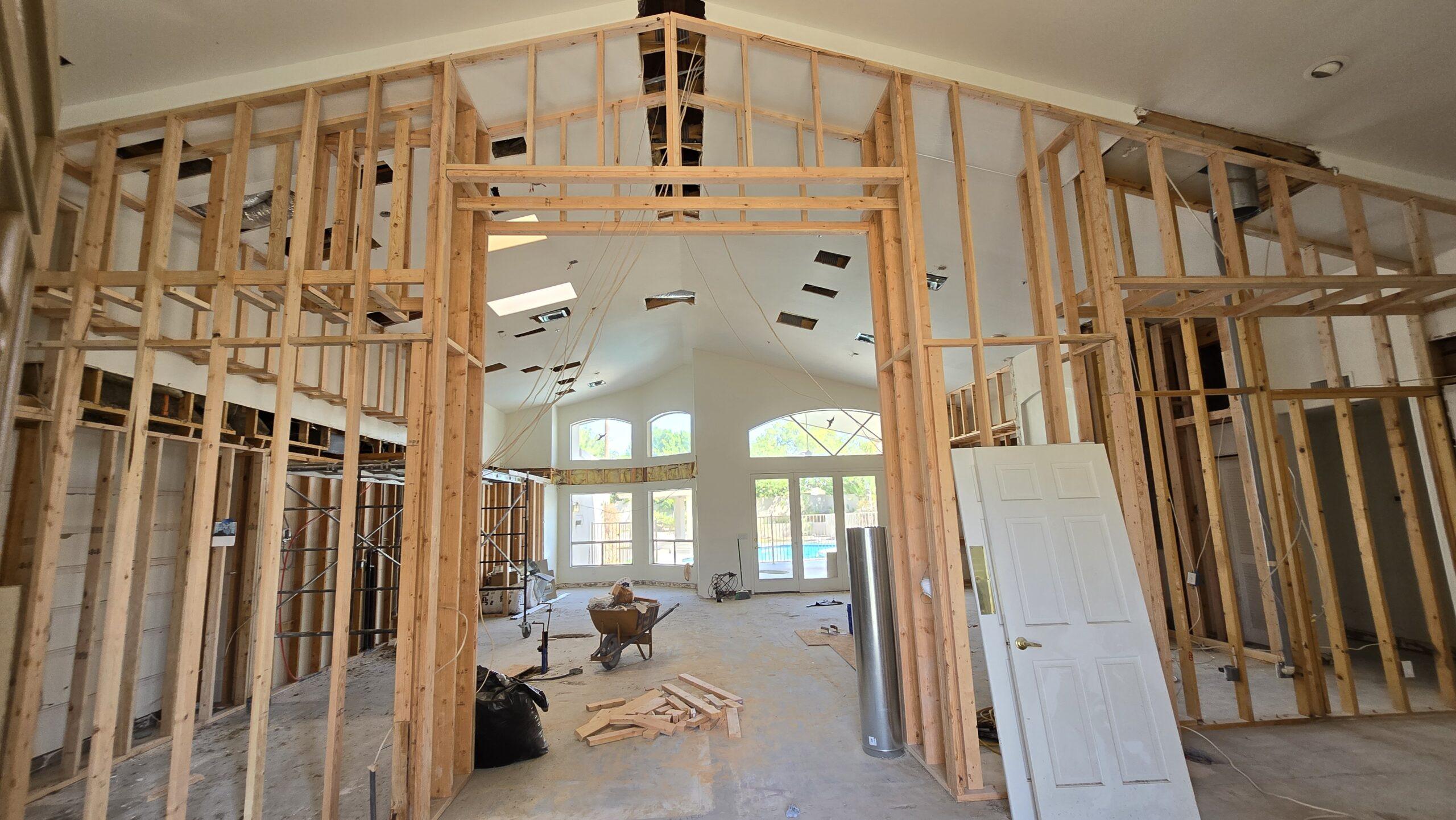
For example, removing a wall may be straightforward if it is a partition. If the wall carries loads, the discussion changes to engineering, beams, support points and possibly foundation work. The finished room may look simple, even though the work needed to create it was not.
Structural changes and old modifications
Before assuming a wall can move or a ceiling can be raised, find out how the roof and floor systems are supported. Review original plans when available, then have the appropriate professional verify what is actually in place.
Past renovations deserve attention, too. An attractive room addition may conceal an awkward structural connection, unexpected slab elevations or older work that was never fully documented. Those conditions can affect the new design even if the addition itself is not being remodeled.
A useful question for your architect and builder is: Which parts of this design depend on assumptions about the existing structure? Those assumptions should be identified early.
Plumbing, drains and underground work
Moving a kitchen, creating a larger primary bathroom or adding a guest suite can require new supply lines, waste lines, vents and equipment. What looks like a short relocation on the floor plan can involve cutting floors, working below slabs, finding workable drain slopes or accessing areas that are difficult to reach.
For homes with aging or repeatedly modified plumbing, it may be more sensible to replace a broader portion of the system while rooms are open than to patch individual connections. That decision should follow actual investigation and a clear scope—not a blanket assumption that all old plumbing is defective.
Electrical capacity, lighting and automation
Modern luxury renovations often introduce substantial lighting, motorized shades, specialty appliances, car charging, new mechanical equipment and sophisticated controls. The visible fixtures are only one part of the work.
The team needs to determine whether existing panels, circuits, pathways and service capacity can accommodate the plan. Even when equipment is serviceable, adding new systems to crowded or poorly documented infrastructure can take more labor than expected.
The same is true of low-voltage wiring. A home may need new pathways before it can support the level of automation the owner imagines.
Air conditioning and comfort
Changing room layouts, ceiling heights and glass areas can alter heating and cooling requirements. The existing air conditioning system should not simply be assumed adequate because it was adequate before.
A qualified mechanical review can identify whether distribution, ductwork, returns, zoning or equipment should change. Scottsdale’s sun exposure and large glazed openings make this especially important. A beautiful room that is consistently uncomfortable is not a successful renovation.
Water intrusion and concealed damage
Roof transitions, exterior openings, shower waterproofing and grading are common places to investigate when there are signs of recurring water problems. Sometimes the visible stain is minor; sometimes opening the area reveals a larger repair.
The goal is not to assume the worst. It is to investigate credible warning signs before finalizing the design and to avoid spending heavily on finishes over an unresolved underlying condition.
For older properties, environmental concerns may require separate evaluation. Our guide to asbestos, lead paint and mold before renovating addresses that particular decision. These are not conditions to diagnose from photographs or handle without appropriate professionals.
Exterior changes can be as consequential as interior ones
A substantial interior remodel often expands into new exterior doors, window walls, patios, pools, driveways, utilities or landscaping. Existing setbacks, site drainage, grade changes and retaining conditions may affect those choices.
That is why the best scope review starts with the property as a whole. A redesigned interior should work with the site, not create a costly conflict with it.
How to reduce uncertainty before the price becomes a commitment
A useful preconstruction investigation is focused, not random. Start with the biggest design decisions and ask what existing conditions could prevent them. Then consider:
- Reviewing available plans, permits and prior renovation records.
- Having the relevant engineer or trade specialist evaluate structural or mechanical assumptions.
- Using carefully located exploratory openings when authorized and safe.
- Separating confirmed work from allowances, contingencies and unresolved decisions.
- Identifying which selections must be finalized before reliable trade pricing is possible.
An investigation has a cost, but it can be much less expensive than discovering a major design conflict after construction is underway.
How much contingency is enough?
There is no responsible universal number for every luxury renovation. The appropriate contingency depends on the property’s age, access, system history, structural changes, known defects and how much investigation has been completed.
Ask whether the budget includes realistic allowances for work that is likely but not yet fully documented, and whether the contract describes how genuinely unforeseen conditions will be handled. A lower initial number is not necessarily a lower final cost.
When should you consider rebuilding instead?
If the desired architecture requires wholesale structural replacement, extensive system reconstruction and major site changes, it is worth comparing renovation against a replacement home before committing to a plan. The relevant comparison includes design limitations, schedule, approvals, disruption and total investment—not only a bid for visible finishes.
Our renovate-or-rebuild planning resource can help frame that decision.
Start with the right property questions
If you are considering a major Scottsdale or Paradise Valley renovation, Bella Legacy can help review the intended scope and identify the construction questions worth investigating before the design moves too far.
Discuss a luxury renovation or submit the property for review. A preliminary review is a planning conversation, not an engineering diagnosis or a fixed-price estimate.