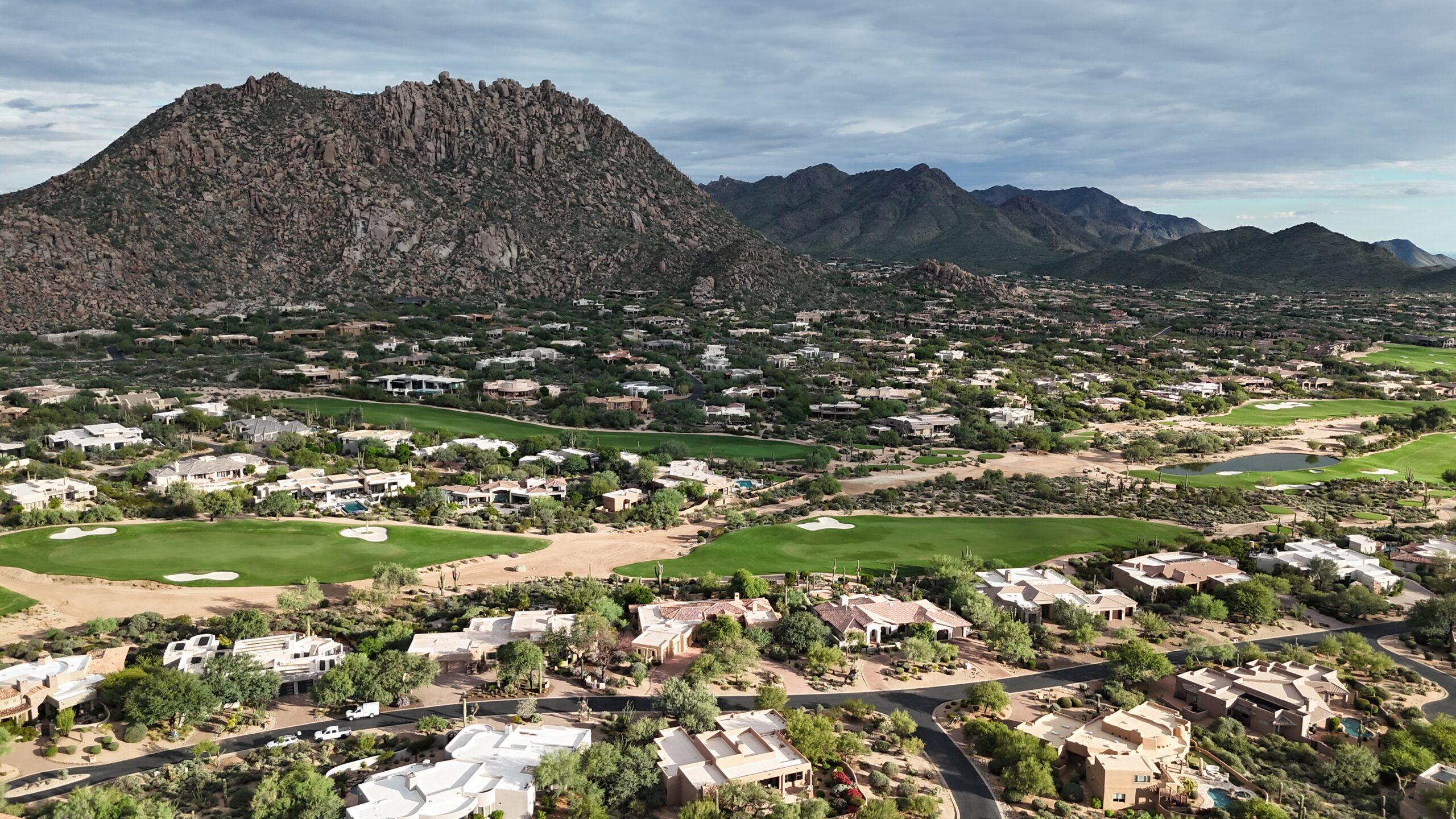
A Scottsdale lot is not “buildable” simply because it is zoned residential or has neighboring homes. True buildability is the result of several layers working together: zoning, setbacks, access, easements, utilities, drainage, flood conditions, topography, soils, overlays, private restrictions and the specific home you want to build.
The better question is not whether some structure can be permitted. It is whether the property can support your intended home in a practical, approvable and economically sensible way.
Start with zoning and overlays
The City of Scottsdale publishes the zoning districts and development standards that apply to single-family property. Those rules establish the starting framework for setbacks, height and other dimensional requirements.
But many North Scottsdale properties also fall within the Environmentally Sensitive Lands overlay, which can require natural-area open space and protection of washes, vegetation, ridges or other sensitive features.
A parcel can therefore be residentially zoned and still have a much more constrained usable development area than the acreage suggests.
Confirm access and utilities
A homesite needs more than room for the house.
The project team should understand:
- legal and physical access
- driveway feasibility
- water service
- sewer or septic strategy
- electrical service
- gas availability where desired
- communications
- fire-department access considerations
- utility easements and extension costs
A beautiful parcel with difficult access or expensive utility extensions can still be buildable, but the project economics may change dramatically.
Drainage and flood conditions matter early
Desert drainage can be deceptively important.
Washes, drainage easements, flood zones and the way stormwater moves across a site can affect building placement, finished-floor elevations, grading and outdoor improvements.
This is not an issue to “solve later.” It belongs in early feasibility.
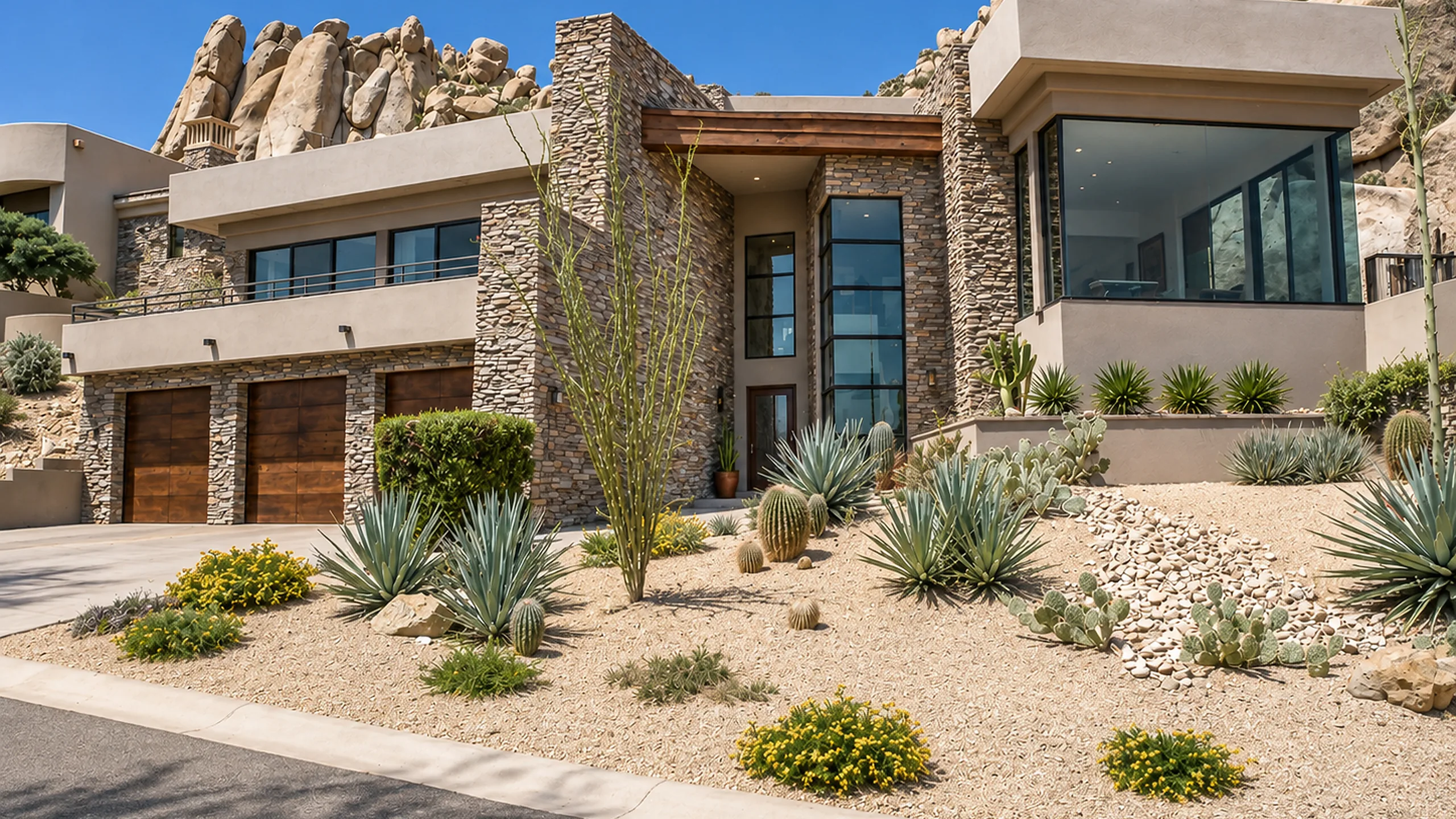
Topography changes the answer
Steep or irregular terrain can require:
- additional civil engineering
- retaining structures
- more complicated foundations
- rock excavation
- longer or steeper driveways
- construction staging solutions
- disturbed-area controls
- different architectural massing
The home may still be feasible—but a flat-lot budget and schedule should not be assumed.
Private rules may be more restrictive
HOA and architectural-review requirements can impose standards beyond city zoning.
Those can affect massing, rooflines, materials, colors, landscape, view protection, construction hours and review sequencing.
Scottsdale specifically directs property owners to review title and HOA restrictions as part of site research.
Buildability is program-specific
A lot that works beautifully for a 4,500-square-foot home may be a poor fit for a 9,000-square-foot estate with a six-car garage, guest house, sport court and large pool.
That is why buildability should be tested against a rough project program.
At minimum, define:
- approximate home size
- single-level vs. multi-level
- garage count
- guest-house needs
- pool/outdoor-living program
- special uses
- desired view orientation
Then evaluate the site.
We do not think “buildable” should mean “the city will probably issue some permit.”
For a luxury custom home, the useful standard is whether the property can support the project you actually want without hidden site conditions forcing major compromises or unplanned cost.
Questions to prepare for a buildability review
Use these questions to prepare for a conversation about the property and your priorities.
Question 1: Is the lot:
- Flat
- Sloped
- Hillside
- Existing home / teardown
- I am not sure
Question 2: What size home are you considering?
- Under 4,000 sq. ft.
- 4,000–7,000 sq. ft.
- 7,000+ sq. ft.
- I am not sure yet
Question 3: What worries you most?
- Zoning / setbacks
- Utilities
- Drainage / flood
- Hillside / grading
- HOA
- Overall feasibility
Result
“The fastest way to answer buildability is to test your intended program against the actual parcel constraints.”
Next Step
Before design goes too far, start with Bella’s Lot & Homesite Evaluation or Pre-Purchase Lot Due Diligence.
More ways to continue
- Check This Lot Before I Move Forward
- See What This Property Could Support
Frequently Asked Questions
Can a Realtor tell me whether the lot is buildable?
A knowledgeable Realtor can provide useful context, but technical buildability should be verified through the appropriate project professionals and authorities.
Does residential zoning guarantee I can build a custom home?
No. Other standards, easements, overlays, site conditions and private restrictions may apply.
Can Bella review a lot before I buy it?
Yes. Bella can help identify the construction and diligence questions that deserve deeper verification.
How Bella investigates buildability before design
Bella can help connect available property records and a buyer’s desired home to the construction questions that matter: slope, access, drainage, setbacks, utilities, foundations and required professional studies. We do not guarantee that a parcel is buildable based on a quick visual review. The purpose is to identify risks early enough that you can obtain the appropriate official and technical answers before major commitments.
For this particular property or project, request a lot evaluation or ask Bella directly in the short form below.