A Scottsdale home is worth renovating when the property, structure and location justify preserving enough of the existing house to create the result you want at an investment level that still makes sense to you.
The decision is not based on age alone.
A 40-year-old home on an exceptional lot may be an excellent renovation candidate. A newer home with a poor structural layout may be much harder to transform efficiently.
Start with what you value about the property
Ask what you are trying to preserve:
- location
- lot
- views
- mature landscape
- neighborhood
- architectural character
- existing square footage
- pool/outdoor improvements
- sentimental value
If you love the property but dislike the house, that is different from loving significant parts of both.
Evaluate the bones, not just finishes
Paint, flooring and cabinetry are easy to see. The bigger questions are:
- foundation and structure
- ceiling heights
- roof configuration
- window/door openings
- plumbing locations
- electrical capacity
- HVAC
- insulation/envelope
- floor-plan circulation
- slab and structural walls
- previous additions
A home can look dated but have excellent bones. Another can look attractive while requiring major reconstruction to accomplish the owner’s goals.
Define the desired end state
Before comparing renovation and rebuild, define what “finished” needs to mean.
Do you want:
- cosmetic modernization
- major kitchen/living transformation
- additional bedrooms
- higher ceilings
- larger glass openings
- indoor-outdoor living
- major addition
- new second story
- complete architectural restyling
- new pool/landscape/garage program
The farther the desired end state moves from the existing structure, the more important a rebuild comparison becomes.
For an older ranch, test the hardest room first
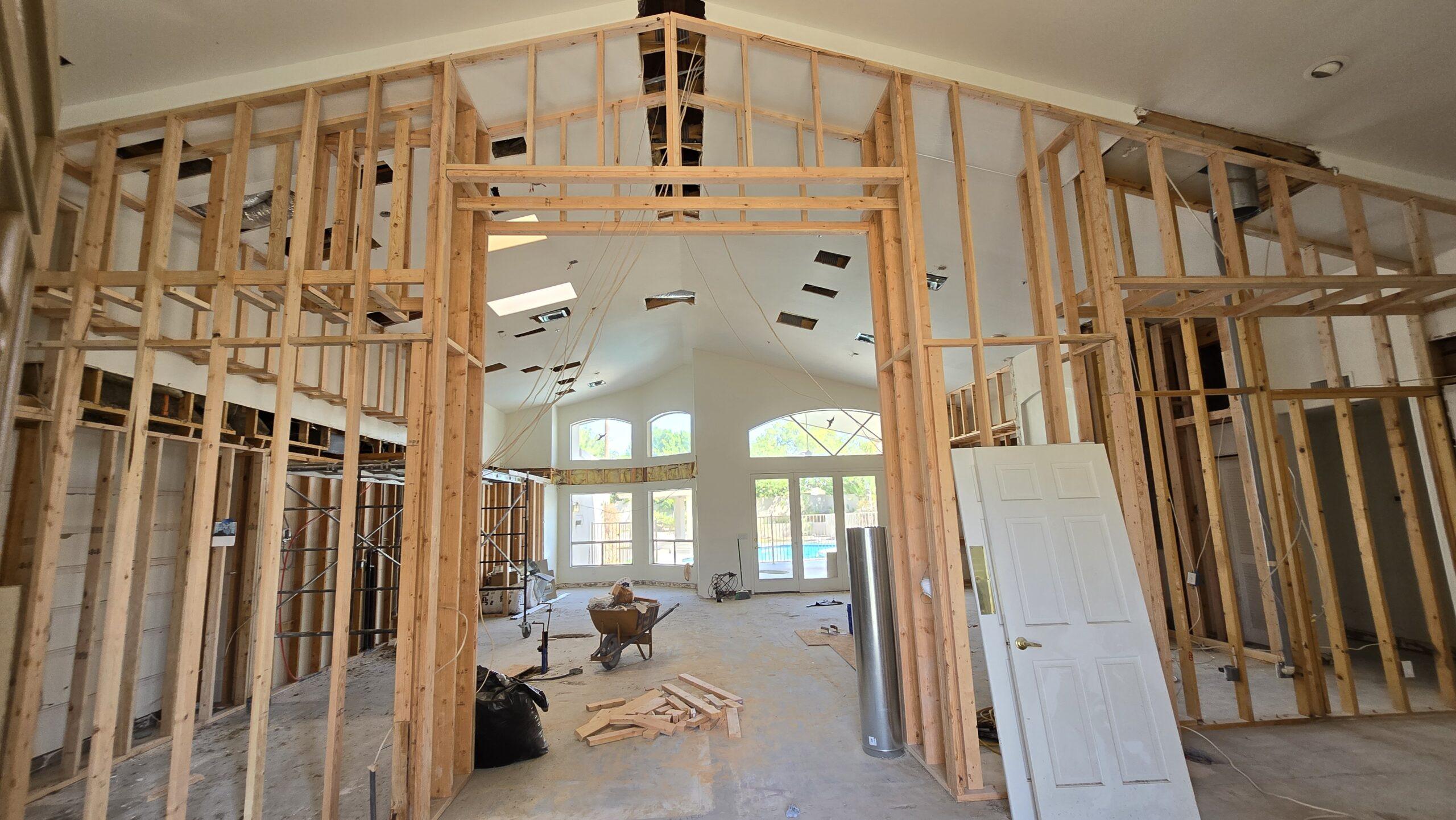
If the purchase or renovation depends on a tall, open great room, a relocated kitchen or a larger garage, study that specific constraint before selecting finishes throughout the house. Ask the architect and builder what the existing roof, structural walls, floor levels and utility routes allow, and which questions need an engineer or another specialist.
Use available plans and permit records as a starting point, then distinguish what was actually measured or inspected from what remains concealed. Any selective opening needs the owner’s permission and an agreed scope. “Good bones” is most useful when it is supported by evidence about the parts of the house you intend to keep.
Then compare the renovation and replacement concepts against the same finished-home requirements. A renovation that preserves most rooms but cannot deliver the essential ceiling height or kitchen relationship is a different product from the replacement concept. Record that compromise alongside the cost, rather than allowing a smaller initial budget to conceal it.
Understand the hidden-work effect
Luxury renovation cost is often driven by work that is not visually exciting:
- structural reinforcement
- relocating plumbing
- new electrical service
- HVAC replacement
- waterproofing
- framing correction
- insulation
- roof changes
- code upgrades
- demolition and reconstruction of areas that appeared “fine”
That is why a simple cost-per-square-foot comparison can be misleading.
Compare investment, disruption and result
Renovation may preserve value and shorten some aspects of the project—but not always.
Compare:
- total anticipated investment
- design compromises
- construction duration
- temporary housing
- retained components
- final ceiling heights/structure
- energy performance
- maintenance reset
- long-term flexibility
Sometimes renovation clearly wins. Sometimes rebuild creates a cleaner path to the desired home.
We prefer to answer the question before a homeowner spends heavily on drawings. If renovation remains the stronger path, our Scottsdale Luxury Renovations page explains how Bella approaches major transformations.
A property-specific review can identify what is worth saving, what is driving cost and whether the desired result is compatible with the existing structure.
Questions to weigh your renovation priorities
Use these questions to prepare for a conversation about the property and your priorities.
Question 1: What do you love about the current property?
- Location
- Lot / views
- Existing home character
- Pool/landscape
- Mostly the neighborhood
Question 2: How much do you want to change?
- Finishes only
- Kitchen / living
- Most interior spaces
- Structure + addition
- Nearly everything
Question 3: What matters most?
- Preserve the home
- Maximize finished result
- Control budget
- Reduce timeline
- Compare renovation and rebuild objectively
Result
“The more your desired end state departs from the existing structure, the more valuable a renovate-vs.-rebuild comparison becomes.”
Next Step
Compare the options using Bella’s Renovate or Rebuild tool, or request a Property Potential Review for the specific home.
More ways to continue
- Compare Both Paths for My Home
- Review My Renovation Potential
Frequently Asked Questions
Is an older home automatically a teardown?
No. Age alone does not determine renovation value.
Can a major renovation cost as much as a rebuild?
It can, particularly when extensive structural and systems work is required.
Should I hire an architect before deciding?
Early architectural input is useful, but the decision is stronger when design and construction considerations are reviewed together.
How Bella evaluates a home before recommending a renovation
Bella can examine your desired layout and finishes alongside the existing structure, systems and site conditions, then help identify which assumptions should be investigated before a substantial budget is set. Some Scottsdale homes are excellent renovation candidates; others require more structural work than the finished photographs suggest. Our approach is to explain the viable paths instead of assuming the most expensive option is automatically the right one.
For this particular property or project, request a property review or ask Bella directly in the short form below.