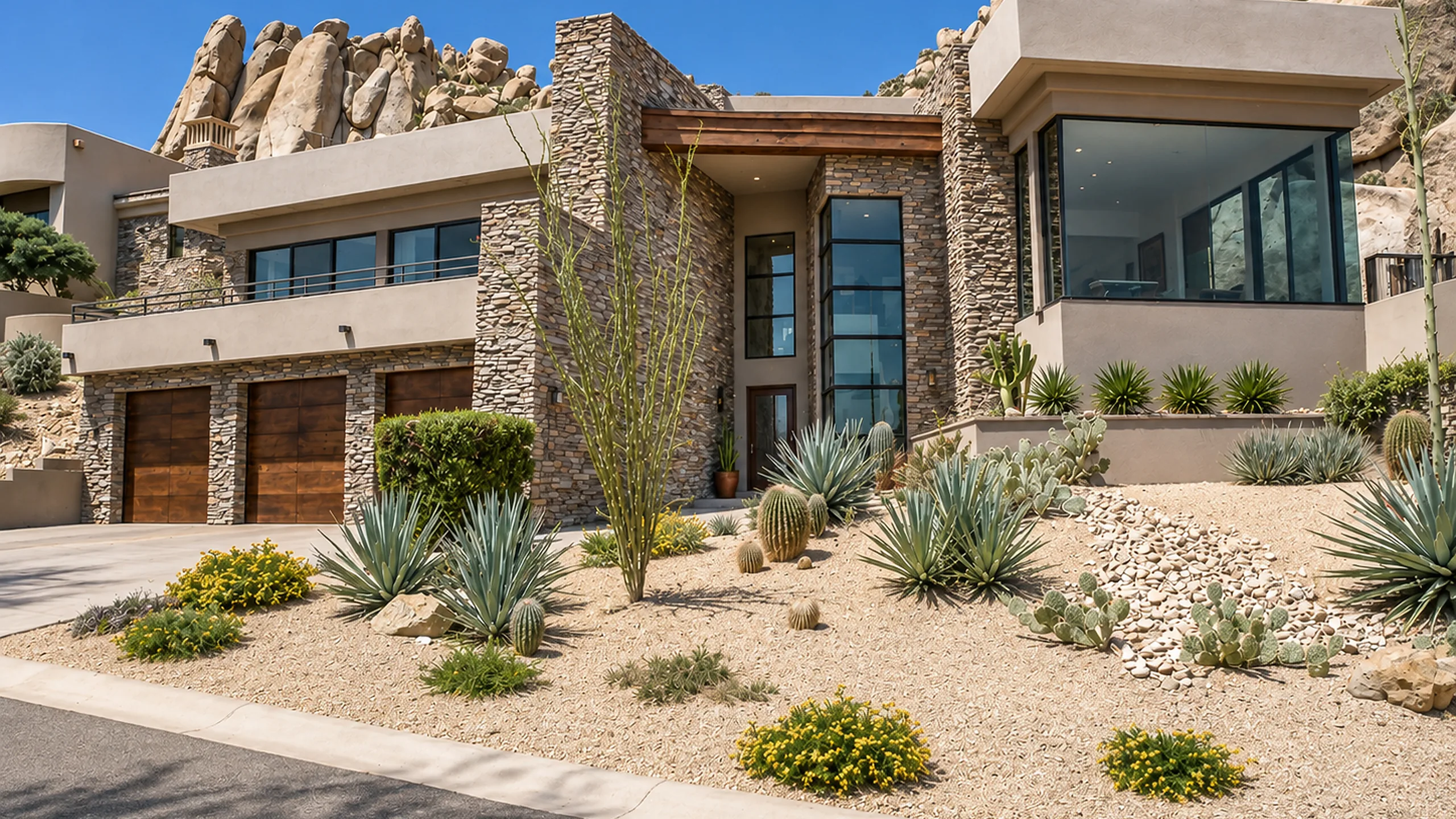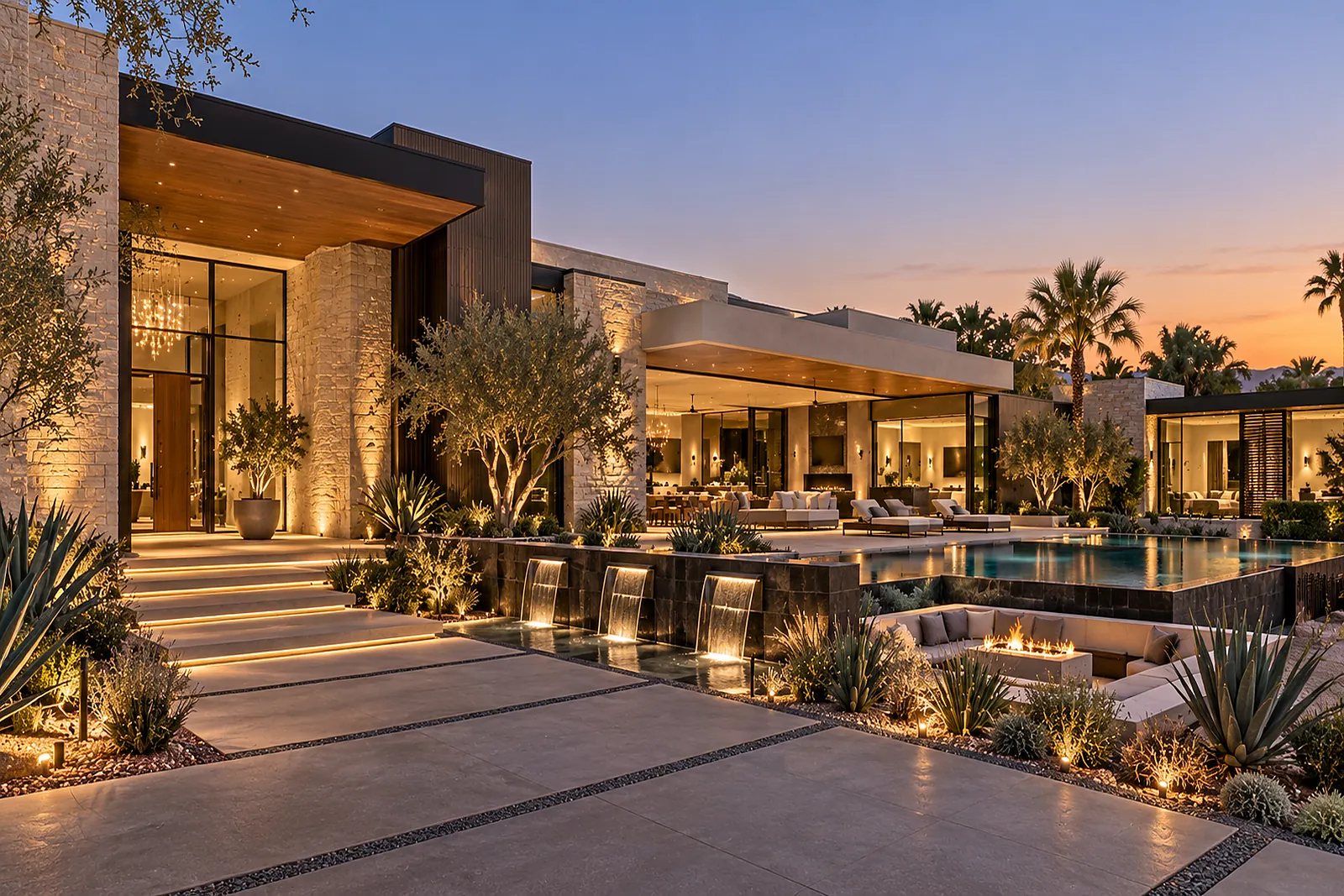
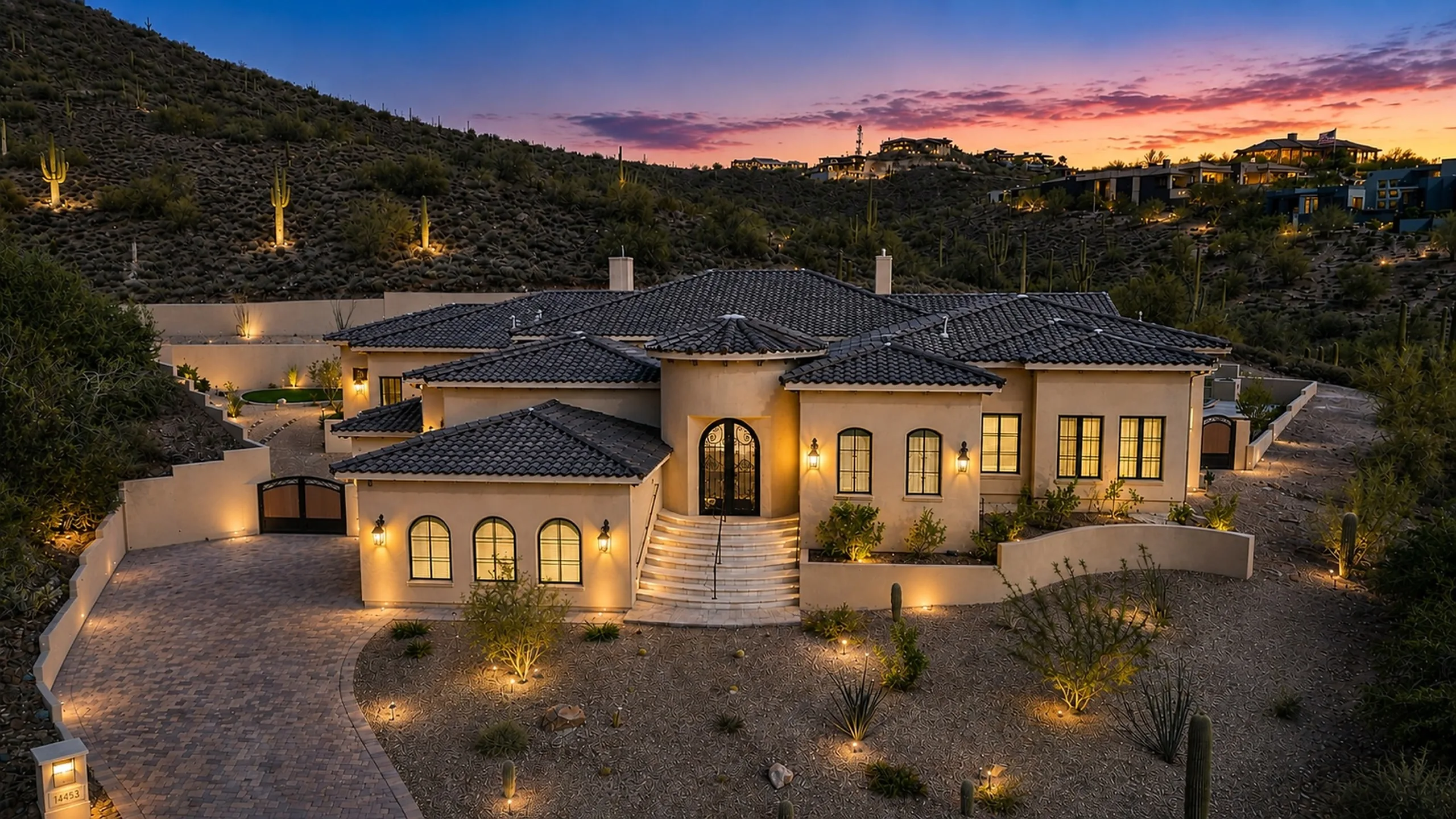
A luxury home in Arizona has to do something more than look beautiful in the desert. It has to live well in a climate defined by intense sun, long warm seasons, dramatic views, outdoor living, dust, heat, and a very different relationship between interior and exterior space than homes in many other parts of the country.
That is why some design decisions matter more here. The right orientation can make a room noticeably more comfortable. Thoughtful shade can turn a patio into a true outdoor living room. The position of glass can capture a mountain view without creating an afternoon heat problem. A well-planned garage, pool, landscape, and mechanical system can quietly improve the experience of the home every day.
For Bella Legacy, those are the kinds of details that define useful luxury: not simply having more, but making the home work better.
1. Orientation That Works With the Sun
The position of a home on its site influences nearly everything that follows: natural light, views, privacy, heat gain, outdoor comfort, pool location, and the character of individual rooms throughout the day.
In Arizona, west-facing glass deserves particular attention because late-afternoon sun can be intense. That does not mean every west view should be avoided. It means the architecture may need deeper overhangs, better-performing glass, exterior shade, thoughtful landscaping, or a different relationship between the opening and the room behind it.
A good site plan looks at the sun and the views together. The objective is not simply to point the home toward the prettiest direction, but to create the best balance of light, outlook, comfort, and privacy.
2. Shade That Is Designed, Not Added Later
Shade is one of the most important architectural tools in the desert. Covered patios, deep roof overhangs, recessed openings, trellises, landscape, courtyard walls, and strategic rooflines can make outdoor spaces dramatically more usable while also protecting interior glass from direct sun.
The strongest shade solutions feel like part of the architecture from the beginning. Instead of adding umbrellas and screens after the home is finished, the home itself creates comfortable places to sit, dine, cook, gather, and move between indoors and outdoors.
3. High-Performance Glass and a Better Building Envelope
Large windows and disappearing glass doors are a signature of many Arizona luxury homes, but more glass also means the building envelope has to work harder. Window performance, insulation, air sealing, roof assemblies, exterior materials, and mechanical design all contribute to comfort.
This is one of the places where quality is often felt more than seen. A home that holds temperature evenly, avoids hot zones near large openings, manages glare, and stays quieter during wind or traffic simply feels more refined.
The design and construction teams should treat the glass, envelope, shading, and HVAC system as connected decisions rather than separate specifications.
4. Indoor-Outdoor Spaces That Function as One
Arizona makes it possible for exterior spaces to become part of the daily living environment for a large portion of the year. The best homes take advantage of that without making the interior feel dependent on the doors being open.
That means planning the great room, kitchen, patio, outdoor kitchen, pool, fire feature, landscape, and views as one composition. Floor elevations should transition cleanly. Furniture zones should make sense on both sides of the glass. The patio should have enough shade and depth to be genuinely comfortable. Lighting, fans, heaters, audio, and cooking equipment should be planned rather than added as an afterthought.
When those details are coordinated, opening the doors changes the scale of the home. When they are not, the indoor and outdoor areas can feel like two separate projects sitting next to one another.
5. Zoned Comfort and Smart Climate Control
Large luxury homes often have rooms that behave very differently depending on orientation, ceiling height, glass area, occupancy, and time of day. A single temperature strategy is rarely ideal for every space.
Thoughtful zoning, properly sized equipment, balanced air distribution, ceiling fans where appropriate, smart controls, and good coordination between architecture and mechanical design can improve comfort without making the technology the focus of the home.
The same idea applies to lighting and window coverings. Automated shades, dimming, scene controls, and exterior shading can respond to the time of day while keeping the experience simple for the people living there.
6. Materials and Landscaping Chosen for Desert Life
Arizona is hard on materials. Intense UV exposure, heat, dust, monsoon rain, and large temperature swings can quickly reveal choices that were made for appearance alone.
Exterior stone, stucco systems, wood, metal finishes, roof materials, sealants, decking, pavers, and landscape elements should be selected with durability and maintenance in mind. The most successful material palettes are not only beautiful on completion day; they age gracefully.
Landscape design matters just as much. The right plant placement can create privacy, soften hard architecture, provide shade, frame views, and reduce glare. Pool design, drainage, irrigation, and water use should be coordinated with the site rather than treated as separate finishing touches.
7. Storage, Garage, and Arrival Spaces That Match Real Life
Some of the most useful luxury features are not glamorous. Arizona homes often support an active lifestyle with golf equipment, bicycles, sports gear, outdoor cushions, pool items, seasonal storage, extra refrigeration, delivery packages, and vehicles that need protection from heat and sun.
A well-planned garage, entry, mudroom or drop zone, pantry, utility room, and storage system can make the home feel more organized every day. The arrival sequence matters too. Coming home through the garage should feel considered, not like entering through the back of the building.
These spaces are easy to reduce when more square footage is wanted somewhere else, but they often have an outsized effect on how well the home functions after move-in.
Luxury in Arizona Is About Ease
The most successful Arizona homes respond to the desert rather than fighting it. They use the sun when it is helpful, shade it when it is not, connect to the outdoors without sacrificing comfort, and organize the practical parts of daily life with the same thought given to the showpiece spaces.
That is why the details that make a home work better are often the same details that make it feel more luxurious. When the architecture, systems, landscape, and lifestyle are considered together, the home feels effortless – and that feeling is difficult to achieve by adding features later.
| Planning a custom home in Scottsdale or the surrounding Arizona communities? Start with the homesite, the way you live, and the climate – then let those three things shape the design together. |
Related Bella Legacy Insights
- Building a Custom Home in Scottsdale: A Step-by-Step Guide
- What Does It Cost to Build a Luxury Custom Home in Scottsdale?
- How Long Does It Take to Build a Luxury Custom Home in Scottsdale?
How Bella turns Arizona-specific design ideas into a buildable home
Bella can help coordinate sun exposure, shade, glazing, indoor-outdoor transitions, mechanical comfort and low-maintenance materials from the early design stages. Those decisions are connected: a view wall affects structural openings and cooling; a covered patio affects drainage and circulation. We work with the design team and specialists to test the owner’s priorities against the site rather than choose features from a generic luxury-home checklist.
Discuss Arizona living priorities, or send Bella a brief message through the inquiry form below.