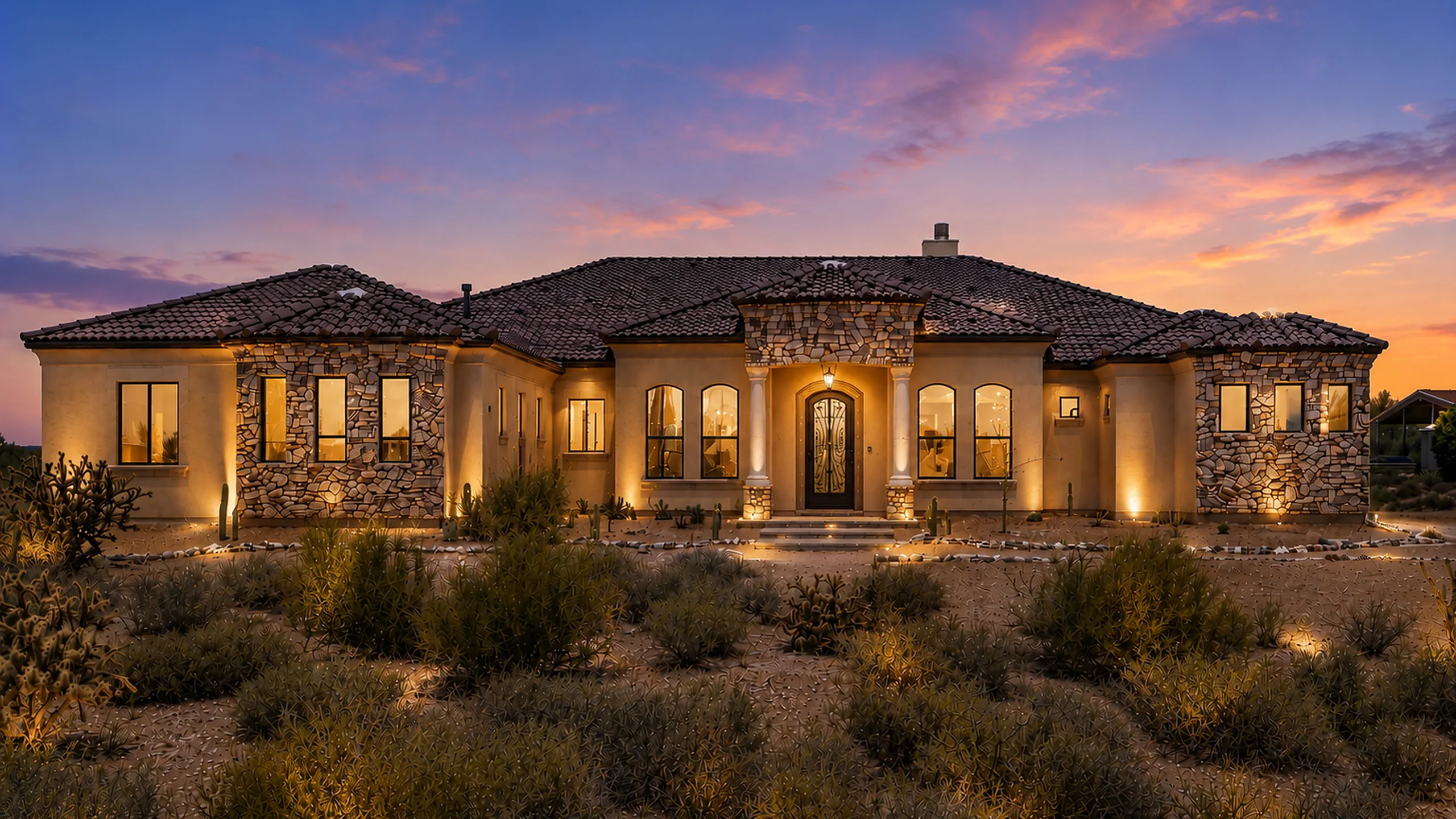
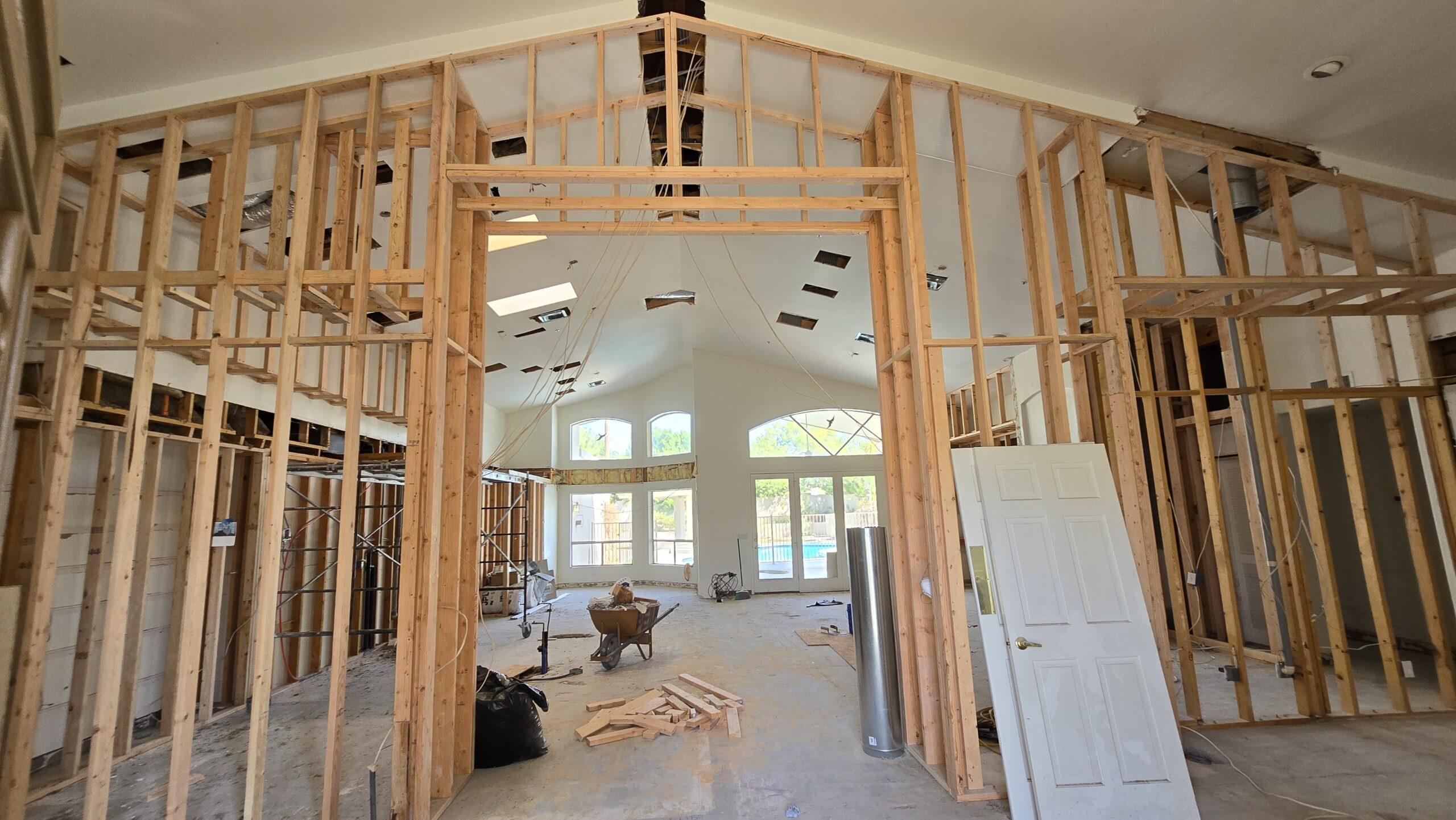
For some homeowners, the first design question is not what the kitchen should look like or how many bedrooms the home should have. It is more fundamental: should we renovate this house, or would we be better off starting over?
There is no universal answer. A significant renovation can preserve a location, view, mature landscape, or architectural character that would be difficult to replace. A rebuild can remove structural and layout constraints and create a home that is completely aligned with the way you want to live.
The best decision usually comes from understanding what is truly valuable about the property, what the existing home can realistically become, and how much compromise each path would require.
Start With What You Cannot Replace: The Location
A house can be changed. A homesite cannot. If you love the street, neighborhood, views, lot orientation, privacy, mature landscape, proximity to family, or the way the property sits within a community, those factors deserve significant weight.
This is especially relevant in established Scottsdale, Paradise Valley, and Fountain Hills neighborhoods where the lot itself may be a large part of the property’s value. If the location is difficult to replicate, renovating or rebuilding on the existing site may both be more attractive than moving.
Look Carefully at the Bones of the Existing Home
A renovation becomes much easier when the existing structure already has some of the qualities the finished home needs. Useful ceiling heights, a workable structural grid, good relationship to the lot, appropriate foundation elevations, and a floor plan that can be improved without fighting every wall all support renovation.
The opposite is also true. If the desired home requires major changes to ceiling heights, roof structure, foundation, room locations, exterior walls, mechanical systems, and orientation, the project may begin to approach a rebuild in complexity while still carrying the compromises of the original structure.
Measure the Gap Between the Home You Have and the Home You Want
One of the most useful exercises is to stop thinking in terms of a list of renovation items and describe the finished home instead. How should the main living spaces connect? How many bedrooms and offices do you need? What should the ceiling heights feel like? How important is indoor-outdoor living? Do you want a larger garage, different primary suite, more privacy, or a completely new architectural identity?
Then compare that vision to the existing house. If most of the desired changes can be achieved by reworking the interior, selective additions, new openings, and targeted structural changes, renovation may be compelling. If the vision requires changing almost everything that defines the original home, rebuilding deserves a serious look.
Understand the Constraints Before Choosing a Direction
Every property has rules that affect what can be built or changed. Setbacks, lot coverage, height limits, drainage, hillside requirements, easements, utility locations, HOA design standards, and municipal codes can influence both renovation and new construction.
An existing home may have legal nonconforming conditions that are valuable to preserve, or it may be positioned in a way that makes an addition difficult. A rebuild may create a better layout but trigger current standards that change the buildable envelope. These issues are best understood before assuming one path has more freedom than the other.
Compare the Total Project – Not Just a Price Per Square Foot
Renovation and new construction are difficult to compare using a simple price-per-square-foot number. A renovation involves demolition, protection of existing areas, investigation, temporary conditions, structural integration, matching new and old work, and unknowns hidden behind walls. A rebuild has its own costs, including demolition, full site work, new structure, and the complete replacement of systems and finishes.
The more useful comparison is the total investment required to reach a similar finished result. What does each path produce? What compromises remain? Which systems are new? How much of the original home is still being relied upon? What site and landscape work is included? And how closely does the final home match the long-term vision?
Consider Time, Disruption, and Where You Will Live
Major renovations can be disruptive, particularly when the work affects most of the home. In some cases, living in the house during construction is unrealistic or slows the work significantly. Temporary housing, storage, moving, and protecting personal belongings become part of the planning.
A rebuild is obviously a full move-out, but the construction sequence can be more straightforward because the project team is not constantly working around finished areas that must remain. Schedule comparisons should consider design, approvals, permitting, demolition, construction, and the amount of uncertainty in the existing structure.
Renovation May Make More Sense When
- You love the location, lot, views, and position of the existing home.
- The structure has good proportions or architectural qualities worth preserving.
- The desired floor plan can be created without rebuilding most of the structure.
- The roof, foundation, utilities, and major systems can support the new vision or be upgraded efficiently.
- The home has character, mature landscape, or site relationships that would be difficult to recreate.
- The finished renovation can feel cohesive rather than like a new home grafted onto an old one.
Rebuilding May Make More Sense When
- The home is poorly oriented to the best views, light, privacy, or outdoor living opportunities.
- Ceiling heights, structural systems, and room relationships conflict with the desired design throughout the house.
- The project would require extensive structural work in almost every major area.
- Most mechanical, electrical, plumbing, roofing, windows, and exterior systems also need replacement.
- The target architectural style is fundamentally different from the existing structure.
- A new design can use the site far more effectively and the existing home offers relatively little worth preserving.
Sometimes the Best Answer Is a More Strategic Renovation
The decision is not always binary. In some homes, the most intelligent approach is to preserve a strong portion of the structure and rebuild the areas that are holding the design back. That can mean keeping a well-located bedroom wing while reconstructing the main living area, replacing an awkward addition, or creating a new outdoor-living relationship without disturbing parts of the home that already work well.
A strategic renovation should still feel intentional when it is complete. The goal is not to preserve something simply because it exists. It is to preserve the parts that genuinely help the final home.
Bring the Builder and Design Team in Early
The renovate-or-rebuild decision is most useful before a large amount of design work has been completed in one direction. An architect can evaluate design potential. A builder can provide practical input on structural implications, sequencing, access, existing conditions, and likely construction complexity.
At Bella Legacy, we prefer to begin by understanding the property and the life the finished home needs to support. Once those two things are clear, the conversation about what should remain and what should change becomes much more productive.
Choose the Path That Protects What You Value Most
A renovation is successful when the existing home gives the new design something worth building on. A rebuild is successful when starting fresh unlocks possibilities that the original structure cannot reasonably provide.
Neither path is automatically more luxurious, more economical, or more sensible. The right choice is the one that respects the property, supports the way you want to live, and creates a finished home you will not immediately wish had gone one step further.
| Considering a major renovation or rebuild in Scottsdale? Start by understanding the property, possibilities, and tradeoffs before choosing a direction. |